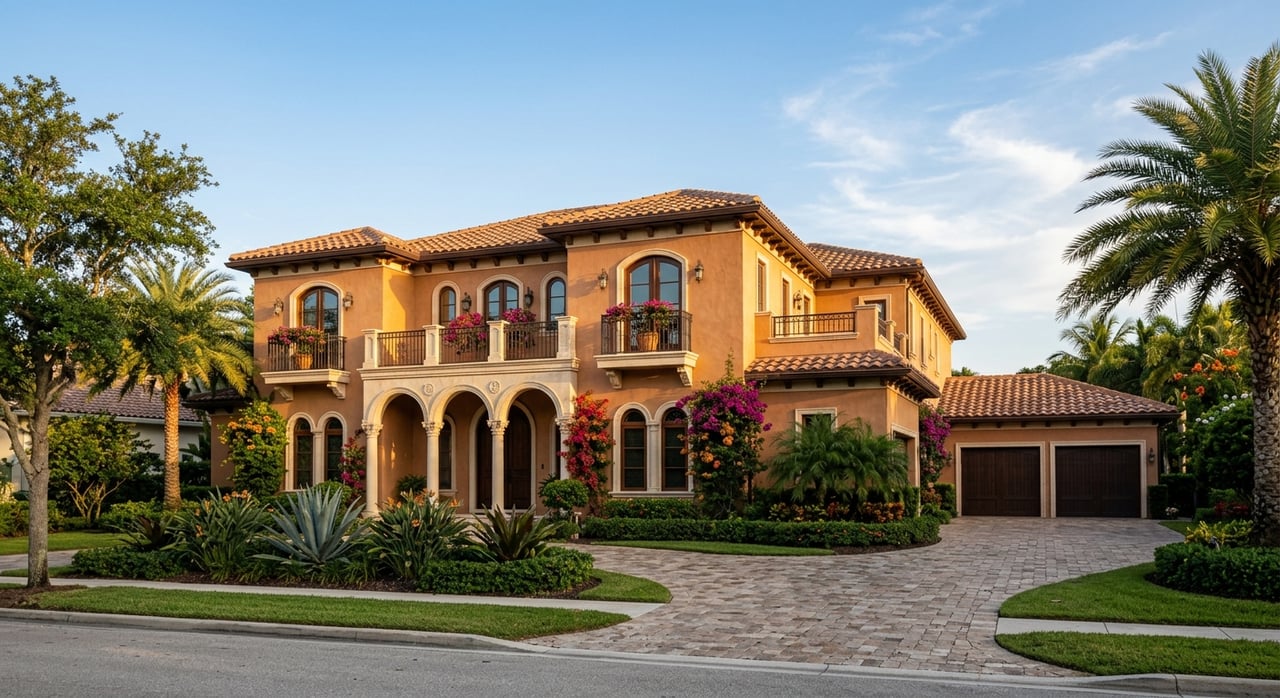
Wondering if you need a waterfront address to enjoy the Fort Lauderdale lifestyle? You do not. Buying a non-waterfront home in Fort Lauderdale can open up more choices in price, architecture, lot size, and neighborhood feel, while still keeping you close to beaches, downtown, parks, restaurants, and cultural venues. If you want to understand where the value is, what tradeoffs to expect, and how to evaluate inland neighborhoods wisely, this guide will help you take the next step with confidence. Let’s dive in.
Why non-waterfront homes stand out
Fort Lauderdale’s non-waterfront market gives you more than one type of opportunity. Recent market snapshots show a citywide median sale price of $609,685, but inland neighborhood medians vary widely, from about $550,000 in Imperial Point and $575,000 in Downtown Fort Lauderdale to roughly $935,000 in Poinsettia Heights and $950,000 in Victoria Park.
That range matters because non-waterfront does not automatically mean budget-level. You may find an entry point into the city, a premium established neighborhood, or simply a way to avoid the highest waterfront premiums while still buying in a desirable part of Fort Lauderdale.
Another advantage is pace. Homes citywide have been taking about 102 days to sell on average, which suggests a market that is not especially competitive. For you, that can mean more room to negotiate on price, repairs, or closing terms than you might expect in more competitive waterfront segments.
Coastal lifestyle without waterfront pricing
One of the biggest myths in Fort Lauderdale real estate is that you have to live on the water to enjoy the city’s appeal. The city is defined by seven miles of beaches, an extensive canal network, Riverwalk, Las Olas, downtown attractions, parks, and major cultural destinations.
In practical terms, that means you can live inland and still stay connected to the same overall lifestyle. You may trade direct water frontage for more flexibility in budget or home style, while keeping access to the places and experiences that make Fort Lauderdale attractive.
The city’s transportation planning supports that idea too. Fort Lauderdale’s Complete Streets policy is designed to improve access for pedestrians, cyclists, drivers, and transit riders, and downtown planning has encouraged more walkable, transit-oriented development near key stations.
What home styles to expect
If you are picturing one standard inland home type, Fort Lauderdale will likely surprise you. Non-waterfront inventory includes older character homes, mid-century options, ranch-style properties, renovated residences, infill construction, and mixed-use adjacent housing in redevelopment areas.
In some areas, you will see compact historic homes with architectural details that feel distinctly South Florida. In others, you may find more suburban-style layouts, larger yards, garages, or newer construction shaped by recent planning and redevelopment goals.
That variety is part of the appeal. Instead of shopping only by price, you can also shop by streetscape, lot size, design era, renovation level, and how closely the area fits your day-to-day routine.
Established neighborhoods with character
Sailboat Bend
Sailboat Bend is the city’s oldest neighborhood and one of the strongest examples of historic inland character. Preservation work highlights small vernacular homes with bungalow, Mission, and Mediterranean Revival details.
If you love charm, original architecture, and a neighborhood with a strong sense of place, Sailboat Bend is worth a closer look. Homes here may offer personality that is hard to replicate in newer construction.
Tarpon River
Tarpon River gives you architectural variety rather than one single look. The area includes older frame vernacular, masonry vernacular, and bungalow homes, along with many mid-century modern and modern vernacular structures.
For buyers, that means the housing stock can feel eclectic in a good way. You may find opportunities across different ages, styles, and renovation levels within the same general area.
Victoria Park
Victoria Park is a key inland example of an established neighborhood with premium pricing. Survey work in the area documents ranch, Spanish Revival, Monterey, Mission, and mid-century modern homes.
With a recent median sale price around $950,000, Victoria Park shows how non-waterfront can still be a high-value purchase. If you want a well-established neighborhood with a broad architectural mix, this is one of the most important inland submarkets to watch.
Premium inland neighborhoods to know
Poinsettia Heights
Poinsettia Heights is another useful example of a premium non-waterfront neighborhood. Recent market snapshots place its median sale price around $935,000.
This reinforces an important point for buyers: inland does not always mean lower-end. In Fort Lauderdale, certain non-waterfront neighborhoods command strong pricing because of their location, housing stock, and overall appeal.
Imperial Point
Imperial Point is a helpful reference point if you want a lower entry price than some of the city’s premium established neighborhoods. Recent market data places the median sale price around $550,000.
That makes it a practical example of how non-waterfront buying can create more access to the Fort Lauderdale market. Depending on the specific home, you may also find features like larger lots or fenced outdoor space that add everyday usability.
Newer and redevelopment-focused areas
Downtown Fort Lauderdale
Downtown Fort Lauderdale is not only a lower-entry pricing example at about $575,000 median sale price, but also a major area for newer residential development. The city has used transit-oriented development standards since 2014 and reports an influx of new residential applications.
If you want to be close to urban energy, mobility options, and newer housing choices, downtown deserves attention. It offers a different lifestyle than older inland neighborhoods, with more emphasis on walkability and access to the city core.
Flagler Village and Progresso
Flagler Village and Progresso are strong examples of areas shaped by redevelopment momentum. The Northwest-Progresso-Flagler Heights CRA’s 2025 redevelopment plan emphasizes housing opportunity, infrastructure, mobility, and cultural preservation.
The area’s scattered-site infill housing program is also designed to turn vacant or underused parcels into detached single-family homes. For buyers, that signals continued attention to long-term neighborhood evolution and housing supply.
Uptown
Uptown Urban Village is another planning area worth knowing if you are interested in newer, more walkable environments. The city describes it as a live-work-entertain district near the Executive Airport and Cypress Creek Mobility Hub.
Its form-based standards are meant to support a more walkable, transit-friendly setting. That can appeal to buyers who want a modern neighborhood concept without paying waterfront premiums.
What features inland buyers may find
Inland homes in Fort Lauderdale often come with practical tradeoffs that many buyers value. Depending on the neighborhood, you may see older footprints with renovations, detached homes with garages, larger or corner lots, and fenced outdoor areas.
The city’s infill housing program gives one useful benchmark for newer detached supply, with homes envisioned at roughly 1,543 to 1,949 square feet under air, 3 to 4 bedrooms, and 1 to 2 car garages. That is not a citywide rule, but it helps show the kind of functionality some inland buyers are targeting.
This is why a non-waterfront search should stay flexible. Some pockets are compact and historic, some are yard-oriented and residential, and some are tied to newer planning and redevelopment patterns.
How to evaluate value correctly
One of the most important things you can do is compare homes within the right submarket. A non-waterfront home should be measured against nearby sales in the same neighborhood class, not against top waterfront inventory.
For example, Rio Vista has a median sale price around $2.1 million, while Downtown Fort Lauderdale and Imperial Point are in the mid-$500,000s. That gap shows why value depends more on the exact neighborhood, condition, lot, and home type than on a simple waterfront versus non-waterfront label.
When you compare properties, focus on:
- Recent sales in the same neighborhood
- Renovation quality and condition
- Lot size and usable outdoor space
- Architectural style and buyer appeal
- Access to downtown, beaches, and daily amenities
- Signs of public investment and neighborhood momentum
Flood and infrastructure checks still matter
Buying inland does not mean skipping flood due diligence. Fort Lauderdale notes that its low elevation and extensive waterways make the city vulnerable to king tides and sea-level rise, and the city has flood-zone development regulations in place.
Before you finalize an offer, each address should be checked for flood map zone, elevation, drainage conditions, and insurance implications. Even when a home is away from the beach, those details can affect both monthly cost and long-term ownership planning.
Infrastructure is another smart value signal. Fort Lauderdale reports a stormwater system with 191.76 miles of gravity main and 187 tidal valves, and the city’s Sidewalk Master Plan identifies about 579 miles of sidewalks and 436 miles of gaps.
You can also look at neighborhood-level reinvestment. Projects such as the Victoria Park watermain work and citywide Fortify Lauderdale Phase 2 neighborhood efforts point to ongoing attention in inland areas, which can matter when you think about livability and future value.
A smart strategy for Fort Lauderdale buyers
The best non-waterfront purchase in Fort Lauderdale is not always the cheapest home. It is the home that fits your priorities for lifestyle, location, architecture, maintenance, and long-term value.
You may decide that a historic home in Sailboat Bend or Tarpon River fits your style better than a newer option. Or you may prefer the pricing of Imperial Point, the established appeal of Victoria Park, or the redevelopment momentum in Flagler Village, Progresso, or Uptown.
The key is to evaluate each area on its own terms. When you do that, Fort Lauderdale’s inland market becomes much more interesting and much more strategic than many buyers first expect.
If you are planning a move in Broward and want help comparing Fort Lauderdale neighborhoods, home styles, and value drivers with a clear local strategy, schedule a private consultation with Pilar Ruiz De La Torre.
FAQs
What does buying a non-waterfront home in Fort Lauderdale usually cost?
- Recent market snapshots show Fort Lauderdale’s citywide median sale price at $609,685, with inland neighborhood medians ranging from about $550,000 in Imperial Point and $575,000 in Downtown Fort Lauderdale to about $935,000 in Poinsettia Heights and $950,000 in Victoria Park.
Which Fort Lauderdale non-waterfront neighborhoods have older character homes?
- Sailboat Bend, Tarpon River, and Victoria Park are strong examples of established inland neighborhoods with older architectural character and a wide range of home styles.
Can you still enjoy the Fort Lauderdale lifestyle without living on the water?
- Yes. The city highlights beaches, Riverwalk, Las Olas, downtown venues, parks, and cultural destinations as part of the overall Fort Lauderdale lifestyle, which many inland neighborhoods can still access conveniently.
Are Fort Lauderdale non-waterfront homes easier to negotiate?
- Citywide data showing homes taking about 102 days to sell on average suggests buyers may have more room to negotiate on price, repairs, or closing terms than in tighter market segments.
Do flood risks still matter for inland Fort Lauderdale homes?
- Yes. The city notes that low elevation and extensive waterways increase vulnerability to flooding, king tides, and sea-level rise, so each property should be reviewed for flood zone, elevation, drainage, and insurance impact.
Which Fort Lauderdale inland areas show redevelopment momentum?
- Downtown Fort Lauderdale, Flagler Village, Progresso, and Uptown are key examples of areas shaped by transit-oriented planning, redevelopment efforts, or newer housing activity.
