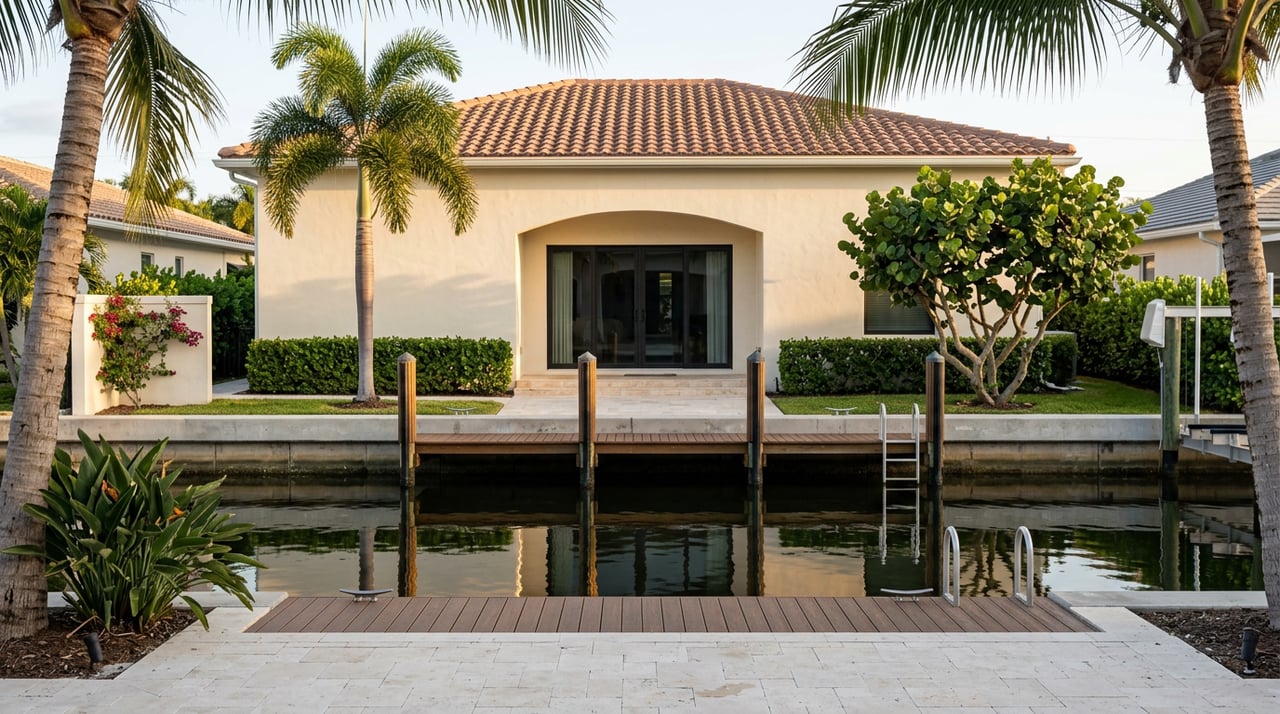
Picture this: morning coffee on your dock, your boat ready for a quick cruise on the Intracoastal. That lifestyle is real in Fort Lauderdale, but the smartest buyers look past the view to what lies under the water and behind the seawall. You want confidence before you commit.
In this guide, you will learn how to vet a property’s boating access, understand permits and seawall standards, compare ownership types, and build a clean due‑diligence checklist. You will also see how insurance and flood risk factor into the deal. Let’s dive in.
Know the rules before you buy
City, county, state, and federal layers
When you change or build anything at the water’s edge, permits matter. In Fort Lauderdale, docks, boatlifts, and seawalls are a recognized permit category that you submit through the City’s system. Start at the City’s building‑permits portal to see submittal types and inspection close‑outs. You can find it under the City’s Business section for building permits. Visit the City portal for docks, lifts, and seawalls to confirm current requirements and forms. Fort Lauderdale’s building‑permits portal
Broward County sets a regional resiliency standard that raises minimum tidal‑barrier elevations and guides how municipalities set seawall design heights. The standard uses the NAVD88 vertical datum and looks ahead to sea‑level projections. This is why two similar walls can have very different replacement scopes. Review Broward’s resiliency guidance to understand how minimum top‑of‑wall elevations affect cost and design. Broward County resiliency standard
If any work touches sovereignty submerged lands, or is seaward of mean high water, the Florida Department of Environmental Protection (FDEP) may require an authorization or submerged‑lands lease. Larger or navigation‑affecting projects can also trigger federal review. Start with FDEP’s submerged‑lands guidance to learn when leases or use authorizations apply. FDEP submerged‑lands management
Local limits on docks and pilings
Fort Lauderdale’s Unified Land Development Regulations set how far docks and mooring piles can extend into a canal, side setbacks, and rules for items like nighttime reflectors or lighting. These limits shape what size vessel can safely fit at a specific lot and how you design any improvements. You can review the local mooring and dock rules in the ULDR. Fort Lauderdale ULDR mooring and dock rules
Timelines and triggers
Permitting often involves more than one agency, so plan for several weeks to months depending on scope. Routine repairs to pre‑existing structures tend to move faster. Substantial‑repair thresholds in Broward and the City can turn a patch job into a full compliance upgrade if you cross a set percentage of the wall’s value or length. That can increase cost and time. Ask for prior permits, final inspections, and any notices of violation before you bid.
Boat access and route planning
Understand your water type
- Oceanfront: fastest ocean access but most exposed to waves and coastal forces. State coastal rules and dune protections can apply.
- Intracoastal frontage: smooth cruising and short runs to inlets. Bridge clearances along your route set your maximum air draft.
- Interior canals: some are deep and wide with quick access to the Intracoastal. Others are narrow cul‑de‑sacs with low fixed bridges or tight turning areas. Always confirm canal width, turning room, and recent dredging history during diligence.
Make a bridge and depth check
Before you fall in love with a view, match the property to your boat.
- Get a recent depth sounding at the dock. If your draft is close to the limit, commission your own.
- Map your route from the dock to the Intracoastal and to the inlet. List every bridge. Note which are fixed and their published clearances, and which are drawbridges with opening schedules. The U.S. Coast Guard maintains drawbridge regulations for the area. USCG drawbridge regulations for Fort Lauderdale
- Check local mooring and dock projection rules to be sure your vessel can fit without exceeding setbacks or encroaching too far into the canal.
Marinas and alternate dockage
Fort Lauderdale is a major yachting hub with full‑service marinas and a strong services ecosystem. If your target property has route limits, a nearby slip can bridge the gap. When you look at marinas, confirm maximum length overall, depth at the slip, and service availability. Demand for large slips is high, so verify availability rather than assuming space will open up.
Ownership structures and who pays
Single‑family control, single‑owner costs
With a single‑family waterfront home, you typically hold fee simple title to the upland lot and are responsible for your seawall, dock, and boatlift. That gives you control over timing and design, but you also carry the permitting and capital costs. Review any recorded easements or agreements that affect the shoreline or dock footprint before you close.
Condominiums and association oversight
In many waterfront condominiums and multifamily communities, docks, slips, and seawalls are common elements or association assets. The Florida Condominium Act gives associations power to maintain, repair, and replace common elements, and to levy assessments according to the governing documents. Review slip assignment rules, guest docking policies, reserve studies, and past assessment history. Start with the statute for baseline association powers. Florida Condominium Act, Chapter 718
HOAs in planned communities
If the property sits in a homeowners association, the Florida Homeowners’ Association Act outlines owner and association responsibilities, budgets, access to records, and special‑assessment processes. Request the declaration, budgets, reserve study, minutes, and any shoreline‑related project plans. Florida Homeowners’ Association Act, Chapter 720
Maintenance, costs, and planning ahead
Seawall lifespan and elevation
Well‑built concrete or steel seawalls are typically designed to last decades. Published engineering guidance describes design lives often in the 20 to 50 year range depending on materials and exposure. Regular inspections and proactive repairs can extend useful life and may keep you below substantial‑repair triggers. Review the engineering context for expected service life. Engineering guidance on seawall design life
In Broward County and the City of Fort Lauderdale, new and substantially repaired seawalls must meet higher minimum elevation standards measured to NAVD88. An older wall surveyed to a different datum can appear higher than it truly is. Always request the as‑built top‑of‑wall elevation in NAVD88 and compare it to current local standards. Learn more about NAVD88 and local mapping. Broward County vertical datum info (NAVD88)
Seawall and dock project realities
Project costs vary with site access, required elevation, tiebacks and piles, disposal, and restoration. Because local standards are raising wall heights, replacement projects may be more complex than a like‑for‑like swap. Gather multiple contractor bids early, and build time into your offer strategy if permits or engineering will be required during your inspection period.
Permits and sequencing
Simple repairs to existing permitted structures often move faster than new construction, dredging, or work seaward of mean high water. If your scope touches sovereignty submerged lands, expect FDEP’s Division of State Lands to be involved and to charge processing fees. Ask the seller for prior permit sets and final inspections, then confirm status with the City before closing. FDEP submerged‑lands management | Fort Lauderdale building permits
Risk, insurance, and due diligence
Flood and tidal considerations
Fort Lauderdale neighborhoods are tidally influenced, and many areas now experience more frequent tidal and King Tide events. Broward County’s updated flood mapping and the shift to NAVD88 provide consistent elevation references. The County’s regional seawall standard, along with City code updates, is designed to reduce tidal flooding by setting higher minimum tidal‑barrier elevations. Evaluate flood risk as a core part of your purchase and compare elevation data to current standards. Broward County vertical datum info (NAVD88)
Insurance reality check
Flood insurance and wind or homeowners insurance are separate products. Florida law has phased in flood coverage requirements tied to Citizens policies by dwelling‑value thresholds and to certain high‑risk areas. Confirm current requirements with your insurer, then obtain written quotes for all needed coverages during your inspection period. Review Florida’s Citizens framework for context. Florida Statutes 627.351
Your buyer due‑diligence checklist
Use this list to keep your offer sharp and your closing on track:
- Title and recorded items: Plat, deed, easements, and any leases or rights for submerged lands or community docks.
- Dock and seawall permits: All City permits, as‑built plans, scopes, final inspections, and any open violations. If the seller cannot provide, request records from the City. Fort Lauderdale building‑permits portal
- Seawall elevation and condition: Top‑of‑wall elevation in NAVD88 plus any recent inspection or engineering reports. If needed, commission an elevation survey and structural assessment. About NAVD88 in Broward
- Ownership of docks and lands: Clarify who owns and maintains the dock, slip, seawall, and any submerged lands. If applicable, review FDEP submerged‑lands authorizations. FDEP submerged‑lands management
- Canal depth and dredging history: Last depth sounding, date of last dredging, and who funds future dredging if needed.
- Bridge and route review: A route map to the inlet noting each bridge, fixed clearances, and drawbridge opening schedules. USCG drawbridge regulations
- Association documents: If a condo or HOA, request the declaration, rules, budgets, reserve study, minutes, insurance certificates, slip‑assignment rules, and any pending shoreline projects. Review rights and duties under Chapters 718 and 720. Florida Condominium Act | Florida HOA Act
- Flood and insurance: FEMA flood zone, Elevation Certificate, and firm quotes for homeowners, wind, and flood insurance tied to your lender’s requirements. Florida Statutes 627.351
How we help you buy smarter
Waterfront purchases are equal parts lifestyle and engineering. You want crisp answers on bridges, depths, permits, seawall elevations, and insurance before you wire a deposit. That is where a concierge‑level process pays off. Our team coordinates the right inspectors and surveyors, organizes permits and as‑builts, reviews association rules, and aligns closing timelines with any needed approvals. For international clients, we can communicate in English, Spanish, or Portuguese and introduce you to trusted legal and mortgage resources so you move forward with clarity.
Ready to personalize this plan to your goals in Fort Lauderdale or greater Broward County? Schedule a private consultation with Pilar Ruiz De La Torre to chart the best path to your waterfront.
FAQs
What permits are needed to add a dock or boatlift in Fort Lauderdale?
- You submit through the City’s permitting system, and projects must meet local structural, setback, and electrical rules; work that touches sovereignty submerged lands can require FDEP authorization and, in some cases, federal review. Fort Lauderdale building‑permits portal | FDEP submerged‑lands
How do I know if my boat will clear the bridges from a Fort Lauderdale canal to the inlet?
- Create a route map that lists each bridge, then check published fixed clearances and drawbridge schedules in the USCG’s drawbridge regulations; verify on the water during inspection. USCG drawbridge regulations
Who pays for seawall repairs in a condo versus a single‑family home?
- In single‑family, owners usually maintain their own seawall and dock. In many condos, docks and seawalls are common elements that the association maintains and funds through dues or assessments under Chapter 718. Always confirm in the governing documents. Florida Condominium Act
How long should a seawall last and why does elevation matter in Broward?
- Many seawalls are designed for 20 to 50 years based on materials and exposure. Broward’s standard sets higher minimum tidal‑barrier elevations measured to NAVD88, which can affect scope and cost when you repair or replace. Engineering guidance | NAVD88 info
Do I need flood insurance for a waterfront home in Fort Lauderdale?
- Lenders may require it based on flood zone, and Florida law has added flood coverage requirements for certain Citizens policies by value thresholds. Always get written quotes early in your inspection period. Florida Statutes 627.351
