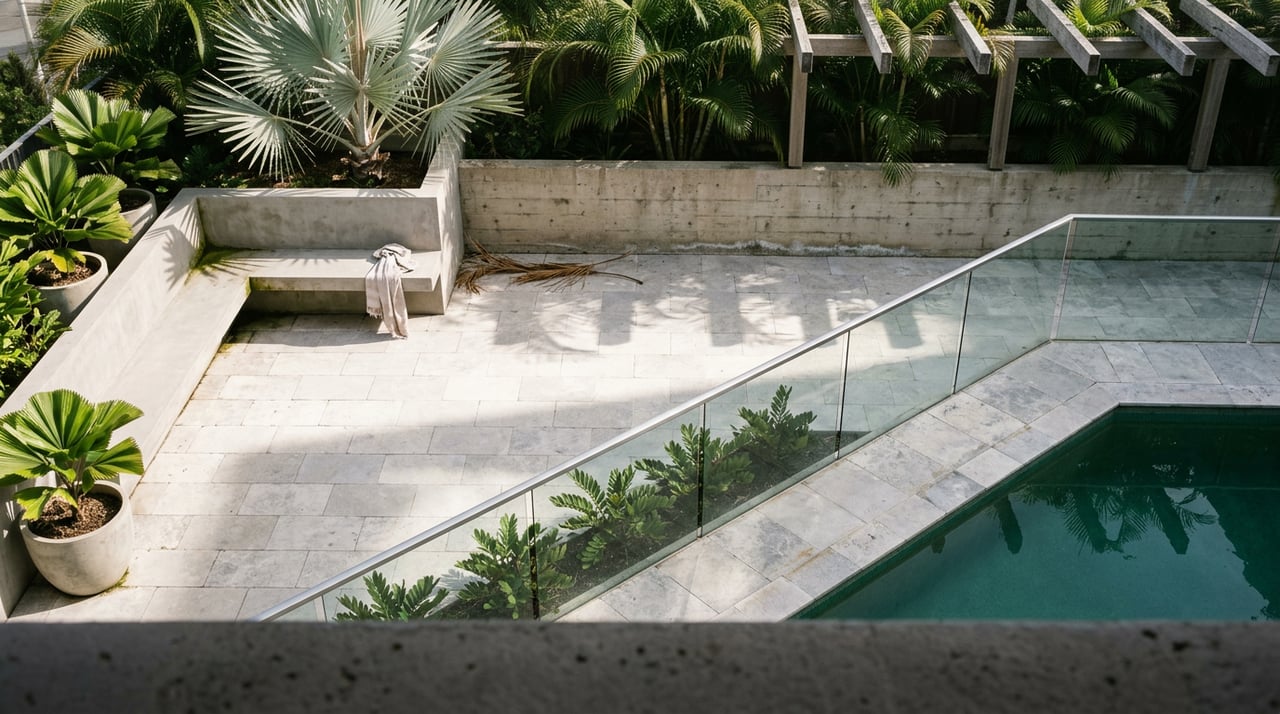
In late 2024, owners at two towers inside 1060 Brickell opened a notice that turned their monthly HOA statement into an afterthought. A structural integrity reserve study had flagged the Tower 2 facade, the roof, and the pool deck for near-term work, and the board approved a $21 million special assessment to cover it. Some individual unit owners were staring at bills topping $40,000, due on top of whatever they already paid every month to live there. These are not 1980s towers with decades of neglect behind them. They were roughly sixteen years old.
That detail matters more than it might seem. A sixteen-year-old Brickell condo is exactly the kind of building most buyers assume is safe from this. It isn't 1970s concrete. It isn't the building your parents warn you about. And it still generated one of the largest single special assessments in recent Brickell memory.
The Gap on the Spec Sheet
Anyone comparing Brickell listings this year has noticed a strange split. Resale condos in solid, well-managed buildings are trading somewhere in the $650 to $1,100 per square foot range depending on tower quality and finish level. Meanwhile, pre-construction and new-delivery product is pricing in a completely different zone, averaging close to $1,650 per square foot as of the first quarter of 2026, with branded ultra-luxury towers like the St. Regis Residences, Cipriani Residences, and 888 Brickell by Dolce & Gabbana asking $2,500 to $3,000 or more.
That is not a modest premium. It is a two-to-three-times markup for what is, on paper, the same neighborhood, the same walk score, the same access to the Metromover and the Underline. The easy explanation is finishes and amenities. Newer buildings have better appliances, sharper lobbies, and a rooftop that looks good in a listing photo. That explanation is real, but it is not the whole story, and it is not even the largest part of it.
The Part of the Story Nobody Photographs
"I feel like I'm being milked."
That was one 1060 Brickell owner's reaction, quoted after the board approved the assessment. It is an understandable response, but it also captures something structural rather than personal. That owner didn't choose to be milked. They bought into a building whose reserve accounts hadn't kept pace with the eventual cost of maintaining a Brickell high-rise, and Florida law just made that gap impossible to hide any longer.
Why 2026 Is When the Math Changes
Florida's post-Surfside reforms, built out through SB 4-D and refined by HB 913, created two separate but overlapping requirements for condo buildings three stories or taller. The first is a structural integrity reserve study, or SIRS, which applies based on the building's height, not its age. Every qualifying association has to complete one, identify what major systems will need repair or replacement, and then fund reserves against that schedule. Associations can no longer vote to waive or underfund those reserves the way they could for decades. The original deadline for completing the study was pushed to December 31, 2025, and any budget adopted after January 1, 2025 has to begin funding those reserves without the waiver option that older boards used to rely on.
The second requirement, the milestone structural inspection, is age-triggered rather than height-triggered. Buildings within three miles of the coast face their first inspection at 25 years, everyone else at 30, with recertification every ten years after that. This is the piece most people have heard about. It is not the piece that hit 1060 Brickell. That building's problem came from the SIRS, the study every qualifying tower has to complete regardless of how new it is, which is exactly why a sixteen-year-old building could generate a $21 million bill while sitting nowhere near its first milestone inspection.
New Doesn't Mean Immune. It Means Zero Balance.
This is the distinction that the price-per-square-foot gap is actually pricing in. A brand-new Brickell tower delivering in 2026 or 2027 still has to complete a SIRS. The law doesn't exempt new buildings from that. What it doesn't have is thirty years, or even ten years, of deferred maintenance sitting underneath the study's findings. The reserve fund starts at zero liability because there's nothing yet to catch up on. The roof hasn't aged. The pool deck hasn't cracked. The facade hasn't spent a decade absorbing salt air.
A resale unit in an established building is buying into whatever position that building's reserves are actually in, and as of 2026, that position is disclosed in far more detail than it used to be. Buyers aren't guessing anymore. They can request the documents and see exactly where a building stands before they sign anything.
| Established Resale | New Construction / Pre-Construction | |
|---|---|---|
| Price per square foot (2026) | roughly $650–$1,100 depending on building tier | roughly $1,650, and $2,500–$3,000+ for branded ultra-luxury |
| SIRS reserve backlog | variable, often decades of deferred items now being funded | none, reserve schedule starts at delivery |
| Milestone inspection exposure | live risk if building is 25–30+ years old | typically decades away |
| Documented special assessment cases | $21M at 1060 Brickell alone; $30,000–$75,000+ per unit reported in 1975–1995 stock | not applicable until the building ages into its first cycle |
| Monthly HOA range | $0.80–$2.50 per square foot | $0.80–$2.50 per square foot, though older buildings' trajectory is harder to predict mid-catch-up |
How The Bill Actually Gets Split
Special assessments aren't divided evenly across owners. They're allocated according to each unit's ownership percentage in the declaration, which usually tracks square footage. If your unit represents two percent of the building's total ownership and the board levies a $1 million assessment, your share is $20,000. Scale that math up to a $21 million assessment spread across two towers, and it's easy to see how individual bills at 1060 Brickell landed north of $40,000 for some owners, while others paid less depending on unit size.
This is also why buildings in the 1975 to 1995 range have become a specific pressure point across Miami-Dade. Reports of individual special assessments running $30,000 to $75,000 per unit, and in some cases past $100,000, are becoming common in that vintage as reserve requirements catch up with decades of underfunding at once. 1060 Brickell shows the same mechanism can reach a much younger building if the SIRS finds enough deferred work.
What To Request Before You Write An Offer
If you're comparing a specific resale unit against a specific pre-construction reservation in Brickell, three documents tell you almost everything the price-per-square-foot number can't.
- The most recent Structural Integrity Reserve Study. This shows which components the association has identified as needing future repair or replacement, and how well the reserve fund is tracking against that schedule.
- The milestone inspection report, if the building is 25 to 30 years or older. Phase one is a visual inspection. If it finds no substantial deterioration, nothing further is required. If it does, phase two involves materials testing and probing, and any deficiencies found have to be addressed within 365 days of the report.
- A written disclosure of all current, pending, and anticipated special assessments, including per-unit amounts and payment schedules. Ask specifically about assessments the board has approved but not yet levied, since a board can approve one item and notify owners of it the next month.
Sellers are required to disclose known assessments under Florida condo law, but asking for these three documents directly, before you're deep into a contract, gives you a clearer picture than waiting for disclosure to catch up to you.
Pricing The Two Products Side By Side
Once you have those documents, the comparison changes shape. A resale unit at $700 per square foot with a fully funded reserve and a clean milestone report is a genuinely different purchase than a resale unit at the same price with an underfunded SIRS and a special assessment vote scheduled for next quarter. The second one isn't really priced at $700 a foot. It's priced at $700 plus whatever your ownership percentage works out to once the assessment lands.
That's the real comparison against new construction's $1,650 to $3,000 a foot. You're not just paying for a nicer lobby. You're paying to start the reserve clock at zero and skip a bill that, in at least one Brickell building, already came due.
A Short FAQ
Does a special assessment follow the unit or the seller? It follows the unit and becomes the new owner's responsibility unless the purchase contract specifically states the seller will pay it before or at closing. This is a negotiable point, not an automatic one, so it needs to be addressed in writing during the offer stage.
Is a SIRS the same thing as a milestone inspection? No. The SIRS is a reserve funding study required based on building height, regardless of age. The milestone inspection is a structural safety inspection triggered by the building's age, either 25 or 30 years depending on coastal proximity. A building can need one without the other, or both at once.
Does new construction ever carry this risk? Not in the way an established building does. A newly delivered Brickell tower still has to complete a SIRS, but it starts with no backlog of deferred maintenance behind the study's findings. The risk reappears decades down the line, once that building reaches its own first reserve cycle.
If you're weighing a resale unit against a pre-construction reservation in Brickell and want someone to pull the actual reserve documents before you make an offer, Pilar Ruiz Homes can walk through both sides of that comparison with you. Schedule a private consultation with Pilar to price the building, not just the unit.
