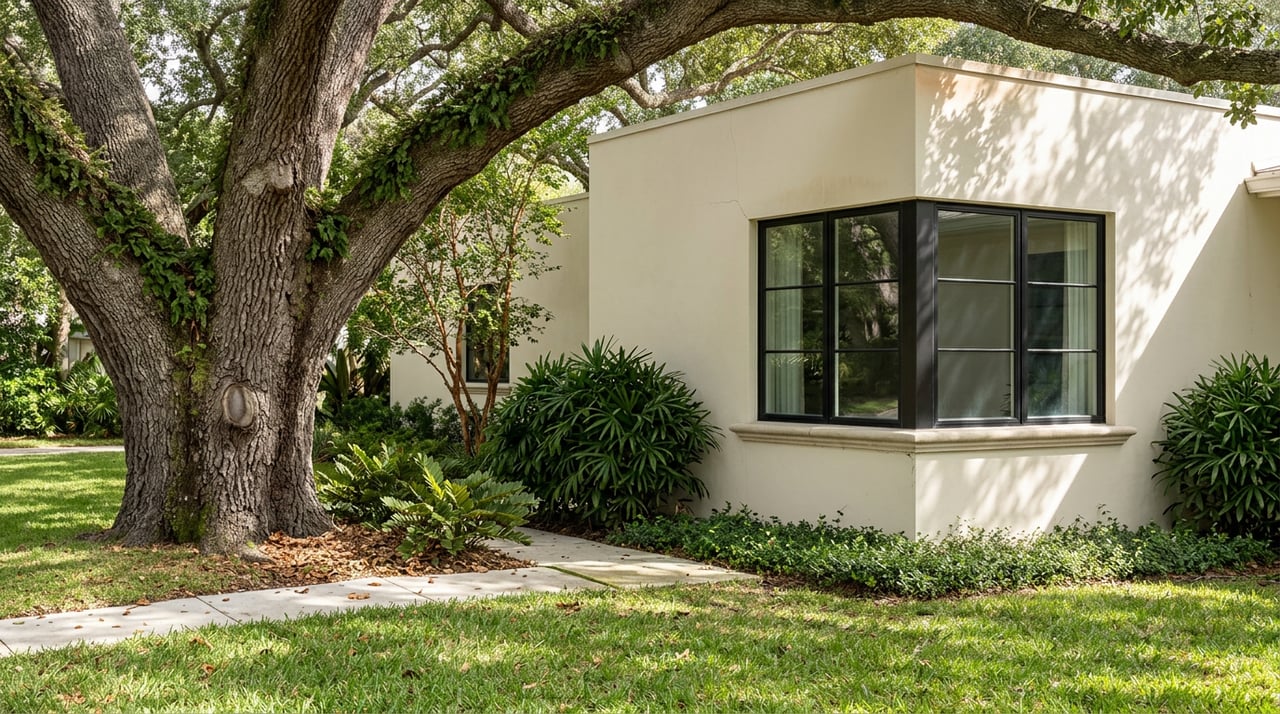
A buyer closes on a Pinecrest lot in July, plans a pool wing and a kitchen addition for the fall, and assumes the building permit is the thing standing between the closing table and the first shovel of dirt. It isn't. If the project touches a tree over 18 inches in diameter, measured four feet above the ground, the Village of Pinecrest will not issue a building permit until a separate tree removal or relocation permit has already cleared review. The building permit waits on the tree permit. Not the other way around.
That sequencing is the part no listing sheet mentions and no median price captures. Two lots priced identically can sit on completely different renovation timelines depending on what is standing in the footprint of the planned work, and the difference shows up as weeks of delay and real replacement cost long before a contractor ever pulls a building permit.
The Rule Nobody Budgets For
The Village calls anything over that 18-inch threshold a specimen tree, and its own guidance is direct about what that status means: removing a specimen tree "destroys shade and animal habitat, and negatively impacts the natural environment," which is why the Village reviews every application individually before deciding whether removal is warranted at all.
Whenever there is proposed construction that involves the removal or relocation of trees, a tree removal or relocation permit must be obtained before the building permit for that construction can be issued.
That's not a suggestion buried in a code appendix. It's printed directly on the Village's own tree removal permit application, and it means the tree review isn't a parallel track running alongside your architect's drawings. It's a gate the building permit has to pass through first.
What Actually Counts As A Specimen Tree
The threshold is simple to state and easy to misjudge on a walk-through:
- Any tree with a trunk diameter over 18 inches, measured 4 feet above grade, is a specimen tree and requires Village review before removal or relocation.
- Every tree removal or relocation on the property requires a permit, not just specimen trees. There's no size floor below which removal is automatically exempt.
- Exotic and invasive species can be granted a fee exemption on the permit itself, but the canopy replacement requirement still applies even to exempt trees.
- The permit application must be signed by both the property owner and the landscape contractor performing the work, and that contractor has to be registered with the Village before the signature counts.
That last point matters more than it looks. A buyer who hires an out-of-area landscaping crew for a quick cleanup before listing photos, or before a renovation kickoff, can find the permit rejected on a technicality that has nothing to do with the trees themselves.
The Replacement Math That Resizes The Lot
Here's where the arithmetic changes the design brief, not just the paperwork. Every tree the Village approves for removal has to be replaced, and the replacement isn't a one-for-one swap. The requirement is double the canopy, or double the diameter for specimen-sized trees, tracked against a canopy credit calculated in square footage.
That means a mature specimen tree standing in the footprint of a planned pool or addition doesn't just get removed and forgotten. Its canopy has to reappear somewhere else on the same lot, at twice the size, on a property that may already be pressed against setback lines. The real constraint on a renovation isn't how large the addition can be. It's how large the addition can be once the replacement canopy has a place to go.
What The Same Project Costs On Two Different Lots
| Renovation Scenario | Tree Permit Trigger | Fee | Canopy Replacement |
|---|---|---|---|
| Addition or pool with no trees over 18" in the footprint | Still required for any tree removed, regardless of size | Minimum $156 for the first three trees, $30 per additional tree | Standard canopy credit, easier to satisfy on open lawn |
| Same project on a lot with two mature specimen trees in the footprint | Tree permit must clear before building permit is issued | Same base fee schedule, plus arborist and site-plan documentation | Double canopy or double diameter, which can require redesigning the addition footprint to fit the replacement planting |
The fee schedule is identical either way. The timeline and the design flexibility are not.
The One-Year Clock And The Stop-Work Risk
Once a tree removal permit is issued, it's only valid for one year, and the Village requires a final inspection to confirm the replacement trees are planted and the canopy has been restored as approved before the file closes. A renovation that stalls for financing or design revisions can outlast its own tree permit, forcing a second application before construction can proceed.
The enforcement side is not soft either. Removing or damaging a specimen tree outside an approved permit triggers a formal Notice of Violation, and the Village's own code, Article 6, Division 6.2(14), authorizes a stop-work order across the entire project, not just the tree work, until the owner comes back into compliance. A buyer who assumes the landscaping crew "just cleared a little brush" before closing has inherited that exposure along with the deed.
Why Two Lots At The Same Price Aren't The Same Project
Pinecrest's building department is explicit that demolition, new construction, and any change to a structure's dimensions or appearance can trigger a design review from Village planners, layered on top of the standard grading, demolition, mechanical, electrical, and plumbing applications a project already requires. The tree permit isn't an isolated hurdle. It's one more gate in a stack that's already taller in Pinecrest than in a neighborhood without the Village's mature-canopy character.
That's the number a citywide median can't show you. A one-acre lot with three specimen oaks in the buildable envelope and a one-acre lot with an open lawn can list for the same price and close in the same thirty days, but one of them has a construction start date that's measured in months, not weeks, once the tree permit, the canopy replacement design, and the design review are accounted for.
How To Time This Before You're Under Contract
If a renovation, addition, or teardown is part of the plan, the tree count belongs in due diligence, not in the punch list after closing. Walk the lot with a tape measure and a sense of where the addition or pool will actually sit. Ask the seller directly whether any tree removal or relocation permits are already on file with the Village, since a permit tied to a prior owner's project doesn't automatically transfer to a new one. Build the one-year permit validity into the construction financing timeline rather than assuming the building permit clock starts the day the contract closes.
Short FAQ
Does a tree outside the construction footprint still need a permit to remove? Yes. Every tree removal or relocation on a Pinecrest property requires a permit from the Village, regardless of size or location on the lot, not only the trees in the path of construction.
Are invasive or exotic trees exempt from the whole process? They can be exempt from the permit fee, but the canopy replacement requirement still applies, so removal isn't cost-free even for a listed invasive species.
If a specimen tree is accidentally damaged during construction and wasn't part of the original permit, what happens? That falls under the Village's violation process, which can produce a Notice of Violation and a stop-work order covering the full project until the matter is resolved, not just the damaged tree.
Does a tree removal permit a seller already obtained carry over to a new owner? Buyers should confirm status directly with the Village's Building and Planning Department rather than assume a permit filed under a previous owner's name still applies, especially given the one-year validity window.
A Pinecrest estate lot is rarely just a price and an address. It's a canopy, a setback line, and a permit sequence that decides how soon a renovation actually starts. If you're comparing lots with a project in mind, that's exactly the kind of local mechanics worth walking through before you write an offer. Pilar Ruiz Homes works these Pinecrest transactions from the due diligence period forward. Schedule a private consultation with Pilar to price the lot against the project you actually intend to build.
